On Thursday, Trump stated that Iran had no more than 15 days to reach an agreement on issues beginning with its nuclear program, and that if it did not, the US will strike.
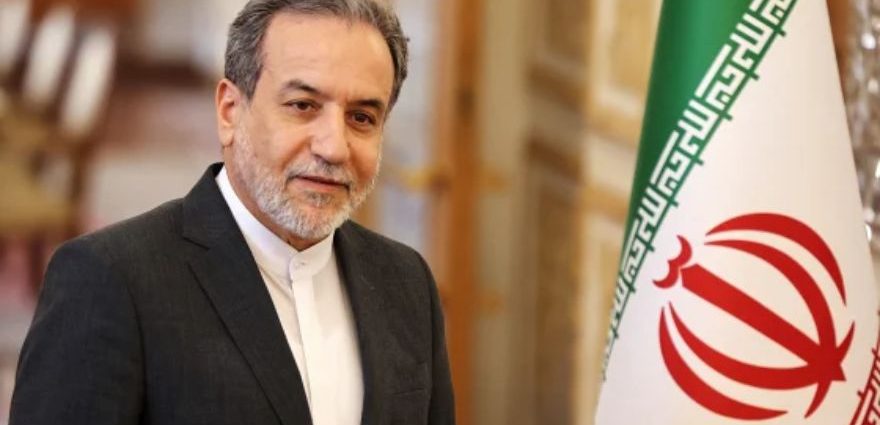
TEHRAN (AFP) – Iran’s Foreign Minister Abbas Araghchi said Tehran will be ready to present its nuclear accord plan to the US in the next days, after President Donald Trump’s warning of military action.
“The next step for me is to deliver [the] draft of the potential contract to my counterparts in the United States. I expect it will be completed in the next two or three days, and following final approval by my superiors, it will be given over to Steve Witkoff,” Araghchi said in an interview released online on Friday with the Morning Joe show on the US television network MSNBC.
However, during his interview, Araghchi stated: “First and foremost, there is no ultimatum.” We just chat to each other about how to get a fast deal. “And both parties are interested in a quick deal,” Araghchi added.
He also stated that US negotiators had not urged that Tehran cease its nuclear enrichment program, contradicting claims from American authorities.
“We have not offered any suspension, and the US side has not asked for zero enrichment,” Araghchi told Reuters.
“What we are now talking about is how to make sure that Iran’s nuclear programme, including enrichment, is peaceful and would remain peaceful forever,” he claimed.
His views contradict information conveyed by high-ranking US officials, including Trump, who has repeatedly stated that Iran should not be permitted to enrich uranium at any level.
Araghchi’s comments came as Washington and Tehran wrapped up a second round of Oman-mediated negotiations in Geneva, Switzerland, on Tuesday.
The two adversaries began their first round of negotiations on February 6 in Oman, after prior talks collapsed during the 12-day Iran-Israel conflict last June, in which the US participated by hitting Iranian nuclear sites.
On Thursday, Trump said the US might strike Iran again if Tehran did not reach an agreement with Washington within 10 days, a deadline he later extended to 15.
Washington has consistently asked for zero enrichment, but it has also attempted to address Iran’s ballistic missile program and suspected backing for terrorist organizations in the area, both of which Israel has pressed to include in the negotiations.
Western countries accuse Iran of attempting to get nuclear weapons.
Tehran denies having such military goals, but maintains its right to the technology for civilian use.
Trump, who has increased pressure on Iran to strike an agreement, has sent a large naval force to the region, which he has referred to as a “armada”.
After dispatching the aircraft carrier USS Abraham Lincoln and escorting battleships to the Gulf in January, he ordered the Gerald Ford, a second carrier, to leave for the Middle East.
Meanwhile, Iranian naval troops conducted military maneuvers in the Gulf and near the crucial Strait of Hormuz this week as part of their own show of force.
Related posts:
 Iran is not transparent about prior nuclear activity, according to the IAEA
A PHILIPPINES MILITARY PLANE WITH 85 PEOPLE ON BOARD CRASHES.
Nusrat Wahid, a PTI MNA, claimed PPP offered Rs160 million.
In Quetta, police broke up a sit-in by young physicians, arresting around 15 of them.
Pakistan has reported 80 COVID-19 cases, with no deaths in the last 24 hours.
Hafizabad police have arrested a suspect in the Shahbaz Gill disaster
A bomb in Karachi killed one person and injured several more
NAB cases: IHC re-hears corruption references against Zardari
Finland’s parliament has voted in favour of NATO membership
Fawad asserts that the Islamabad sit-in has been granted authorization
Iran is not transparent about prior nuclear activity, according to the IAEA
A PHILIPPINES MILITARY PLANE WITH 85 PEOPLE ON BOARD CRASHES.
Nusrat Wahid, a PTI MNA, claimed PPP offered Rs160 million.
In Quetta, police broke up a sit-in by young physicians, arresting around 15 of them.
Pakistan has reported 80 COVID-19 cases, with no deaths in the last 24 hours.
Hafizabad police have arrested a suspect in the Shahbaz Gill disaster
A bomb in Karachi killed one person and injured several more
NAB cases: IHC re-hears corruption references against Zardari
Finland’s parliament has voted in favour of NATO membership
Fawad asserts that the Islamabad sit-in has been granted authorization